Holy Family, Davenport: Catechism 9:30, Confessions 10:15, Rosary 10:35, High Mass 11:00 – fellowship meal afterwards in Enright Hall. Blessing of religious items after Mass in sacristy
St Patrick, Iowa City: Confessions 2:10, Low Mass 2:30. Blessing of religious items after Mass
INSTRUCTION ON BLESSING
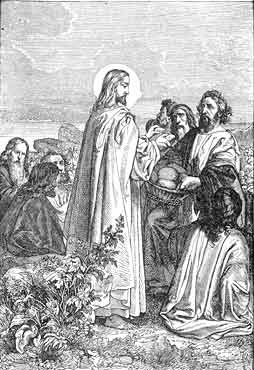
And He blessed them. (Mark VIII. 7.) This is now done by the Church, to which Christ entrusted the power of binding and loosing, and gave the work of sanctifying through the Holy Ghost, by means of blessing and consecrating. By virtue of the merits of Christ, and with the assistance of the Holy Ghost, the Church, or the priest in her name, therefore blesses and consecrates persons as well as other created things which they are to use, or which she is to apply to the service of God. In this the Church follows the example of Christ and the Apostles. Jesus embraced children and laid His hands upon them, blessing them; (Mark X. 16.) He blessed bread and fishes, the food of thousands; blessed breed and wine at the last supper; (Matt. XXVI. 26.) was recognized by the disciples in the blessing of bread; (Luke XXIV. 30.) blessing the disciples He ascended into heaven; (Luke XXIV. 51.) by His command the apostles wished peace to every house into which they stepped; (Matt. X. 12, 13.) and St. Paul expressly says, that every living thing is sanctified by prayer and the word of God. (I Tim. IV. 5.) Following the example and command of Christ the Church also introduced blessings and benedictions which were prefigured in the Old Law. God commanded the priests to sanctify and to consecrate whatever was to belong to His service, (Levit. VIII.) and the Old Law is full of blessings and consecrations which had to be used by the priests; (Exod. XXIX. 36.; XXX. 25.; XI. 9.) and if persons and things used for God’s service were to be blessed, how much more so in the. New Law which in place of the type, contains the reality and truth The testimony of Scripture is confirmed by all the holy Fathers, and by the constant practice of the Church which has received from Christ, the power to bless and to consecrate.
The blessing or benediction of the Church is nothing more than, a prayer of intercession which the priest makes in the name of the Church, that for the sake of Christ (therefore the sign of the cross) and the prayers of the saints, God may give His blessings to a person or thing, and sanctify it. Through consecration, in which besides prayer and the sign of the cross, the anointing with holy oil is used, things required for divine service are separated from all other things and especially sanctified. Thus persons, fruits, bread, wine, houses, ships and fields, are blessed; churches, altars, bells, &c., are consecrated.
What virtue have these blessings?
The chief effects of the blessing of persons are: Preservation or liberation from the influence of Satan; preservation of the soul from his temptations and evil suggestions; reservation of the body and of the property from his ;pernicious malice; forgiveness of venial sins, and strength to suppress concupiscence; curing of sickness and physical evils, whether natural or supernatural; a blessing upon the person and his surroundings; the imparting of the grace of conversion; the advantage of the prayer of the Church and further grace for the remission of temporal and eternal punishment. The blessing of things withdraws them from the influence of the devil, so that he can no longer use them as a means of bringing us into sin, but that they rather serve us as a protection against the evil spirits and as a means for our salvation.
Whence do the blessings derive their force?
From the merits of Christ who by His death on the cross vanquished Satan. The Church asks God that He will through these merits and through the intercession of the saints bless a person or thing, and make that which is blessed profitable to us fox both body and soul. Whether or not the effects manifest themselves in the person who receives the blessing, or makes use of the object blessed, depends on his faith and moral condition, as also on the usefulness or profit of the blessing to him. We should not, then, place obstacles in its way by diffidence in God and the prayers of the Church or by a sinful life, but should always be convinced. that these benedictions will serve for our benefit, if according to God’s will they are used as the Church intends, as a means to overcome evil, to sanctify ourselves, and to honor God.
Why are salt and water blessed?
This is plainly shown in the prayer the priest says in blessing them; for he asks, in the name of the Church, that God may pour the virtue of His blessing over the water that it may conquer devils, prevent sickness, and that everything which is sprinkled with it, may be preserved from every injury, and that He may bless the salt, so that it may be salutary for the body and soul of all who use it. The salt which Eliseus sprinkled into the unwholesome waters of Jericho healed them, (IV King. II. 20. 21.) and is a type of blessed salt.
Why are the people sprinkled with holy water on Sundays?
To remind the people of the interior purity with which they should come to divine service, and fulfil the duties of their calling; and to exhort them to purify themselves from the stains of sin by tears of sorrow, and repentance. Hence the priest in sprinkling the faithful recites the words of the fiftieth psalm: Asperges me hyssopo, etc. Sprinkle me with hyssop, and I shall be cleansed; to remind them to preserve the purity and innocence procured by the blood of the Lamb of God, and communicated to them in baptism. Finally, the people are sprinkled that the temptations of the devil may depart from them, enabling them to attend with great fervor and with more recollection to the holy service.
What else is to be remembered concerning the use of blessed things?
That they are to be used with faithful confidence for the purpose for which the Church blessed them, and are to be treated with great reverence, because they are blessed by the Church in the name of Jesus, a custom almost as old as Christianity itself. The Christian must not believe that blessed things which he possesses, carries, or uses, will make him holy, for he should always remember that things blessed are only a means of sanctification, and are only effectual when the faithful have the earnest will to die rather than sin, to fight with all fervor against the enemies of their salvation, to follow Christ, and be thereby received into the freedom of the children of God, and into heaven. Fr Leonard Goffine
 The Ostende Blog - Fr Christopher Young